A patient searching on Google decides about your clinic in a few seconds. Before your services, your website, or your reception, they see your rating.
A clinic with a strong rating and real reviews feels safer than one with eleven reviews and nothing recent. A 5.0 is not the only thing patients weigh, but it decides whether they keep reading or scroll to the next clinic.
Most clinic owners assume the way to get there is to ask more patients for reviews. It isn't.
Your rating is the output of everything the clinic does — the first phone call, the reception desk, the consultation, the follow-up, and how you answer feedback in public.
What you need is a system, not a push.
Your Rating Is Built Before the Patient Ever Opens Google
You can ask hundreds of patients for reviews. If the visit itself was mediocre, the rating catches up with you eventually.
Ask yourself honestly: if you walked into your own clinic today as a patient, would you leave five stars?
Was the appointment easy to book? Did someone answer the phone politely? Was the reception welcoming, the waiting area clean, the next steps explained? Did the doctor have enough time to actually understand the concern?
Patients don't separate any of that. They fold it into one opinion. Which is why the rating belongs to the whole team, not only to you.
Every Person in the Building Moves the Number
A patient may spend fifteen minutes with you and the rest of the visit with reception, nursing, billing and support staff. One flat interaction can cancel out an excellent consultation.
A review-worthy clinic usually comes down to a few standards held consistently:
- Greeting every patient warmly.
- Keeping waiting times as short as you realistically can.
- Spotless treatment rooms and reception.
- A comfortable lounge — clean seating, drinking water, a pleasant space to wait in.
- Speaking politely and patiently, even on a heavy day.
- Explaining treatments and costs transparently.
- Following up after the consultation when it's needed.
Your reception team matters most here. They are the first and last people a patient talks to, and they are in the best position to ask.
There is a difference between these two asks.
"Please leave us a 5-star review."
"We're glad you had a good experience today. If you have a minute, we'd really appreciate it if you shared your feedback on Google. It helps other patients choose the right clinic."
The second one asks for honesty instead of a number. When the visit went well, it lands as a normal conversation rather than a pitch.
Ask at the Moment the Patient Is Already Happy
Some clinics ask right after the consultation, before anyone knows whether the patient is satisfied. Others ask weeks later, when the visit has faded. Both waste the ask.
The best moment is when the patient has already said something good:
"I'm feeling much better now."
"The treatment really helped."
"Thank you, everything went smoothly."
Your staff know these moments when they hear them. Asking then feels personal. Asking everyone at the same fixed stage mostly gets ignored.
Make Leaving the Review One Tap
Even a happy patient will drop off if the process has steps. Every extra step costs you reviews.
So don't ask them to search for your clinic. Hand them the path:
- A Google review QR code at the reception desk.
- A one-click review link over WhatsApp or SMS.
- A follow-up email with the direct link.
Plenty of clinics have lifted their review count just by replacing spoken instructions with a QR code that opens the review page instantly.
Build a Follow-up System Instead of Relying on Memory
Nobody at a busy front desk remembers who to follow up with. Build the sequence once instead.
Patient completes treatment
↓
A follow-up message goes out after 3 to 5 days asking how the recovery is going
↓
If the reply is positive, they get the direct Google review link
↓
Thank them once the review is in
It works because the first message isn't a review request. It's a check-in. Patients notice when a clinic still cares after the billing is done.
How ClinicsRush Handles This
After the visit, your receptionist adds the patient in about ten seconds. That's the whole job.
From there the patient gets a WhatsApp message from your clinic, at the right moment. It asks how they're doing before it asks for anything.
If they're happy, they go straight to your Google review page through a direct link.
If they're not, the message comes back to you privately — before it becomes a public review. You get the chance to fix it while it's still fixable, and your profile keeps reflecting the visits that actually went well.
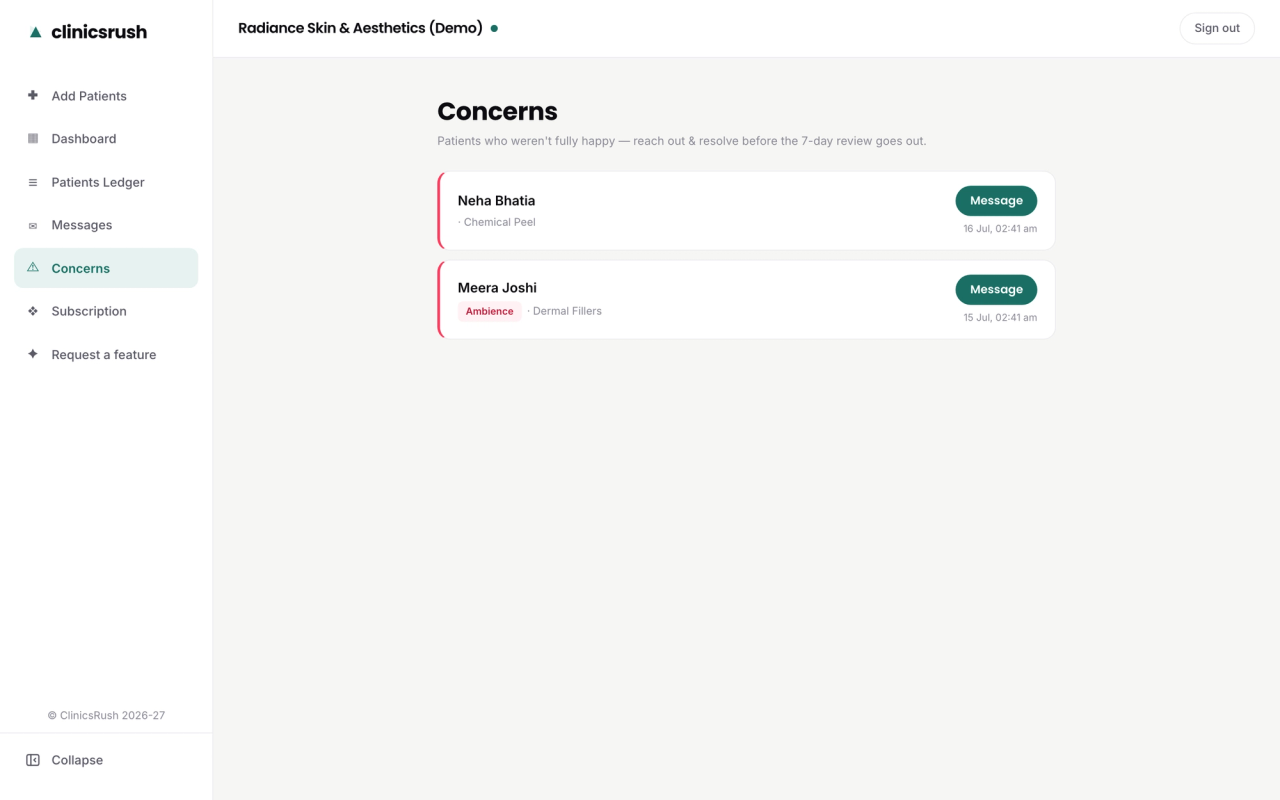
The real gain isn't automation. It's that every patient gets the same follow-up, and nobody has to remember anything.
If you want the whole engine rather than the review piece — a paid-consultation funnel that brings in higher-value patients, follow-up automation that gets them to show up and come back, and the local SEO around it — that's the Booked Out Clinic System. Built once, and it's yours to keep.
Negative Reviews Are Not the Emergency You Think
No clinic avoids them entirely. Even excellent ones pick up the occasional four-star or an unhappy patient.
What separates clinics is the response. Most either ignore it or get defensive. Neither helps.
Usually the complaint is specific and ordinary. They waited longer than expected. The treatment plan wasn't clear. Billing was confusing. Or they felt nobody listened.
Acknowledge the experience professionally. Thank them for the feedback. Apologise where it's warranted. Then invite them to contact the clinic directly so you can hear the detail. Patients want a solution, not an argument in public.
Can a Negative Review Turn Into a Positive One?
Often, yes.
Once the concern is resolved, you can invite them back for another consultation or make it right where that's appropriate. The point isn't to talk someone into changing a rating — it's to actually fix their experience.
If they leave satisfied, you can politely ask whether they'd like to update the review to reflect the full story. Many patients do it on their own once they see the clinic cared about the problem rather than the score.
A complaint handled well can build more trust than a dozen perfect reviews, because it shows future patients what happens when something goes wrong.
Consistency Wins. Shortcuts Don't.
Google reads review patterns, not just totals.
Forty reviews in a week followed by six quiet months looks manufactured. A steady trickle across the year is far more credible — and it tells patients your care is still good this month.
So skip the monthly targets. Just make sure every satisfied patient gets the chance to leave feedback.
Keep Your Google Business Profile Alive
A profile you set up once and never touched is a dead profile. Upload regularly:
- Recent clinic photos.
- Doctor and staff photographs.
- New equipment or facility upgrades.
- Health awareness campaigns.
- Clinic updates.
- Holiday timings.
- New services.
Real photographs beat stock images every time, because patients are trying to picture the room they'll be sitting in.
Then check the basics are still accurate: clinic name, address, phone number, website, business hours, categories, services. Outdated details cost you with Google and with patients.
What Not to Do
Avoid all of this:
- Asking staff members to review the clinic.
- Creating fake patient accounts.
- Collecting dozens of reviews from the same device or internet connection.
- Pressuring patients to leave only five-star reviews.
- Offering discounts, gifts, or incentives in exchange for reviews.
Google is built to spot these patterns, and the usual outcome is your reviews getting filtered or removed.
The safest strategy is also the dullest one. Deliver good care. Ask satisfied patients for honest feedback. Make it easy. Repeat.
A 5.0 Means Little if the Reviews Say Nothing
Patients read the reviews, not just the number.
"Good clinic" and "Nice doctor" tell them nothing. Detailed reviews are what convince people, because they describe a real visit.
Without scripting anyone, you can encourage patients to mention:
- The treatment they received.
- Their experience with the staff.
- The cleanliness of the clinic.
- How comfortable they felt during the visit.
Longer reviews give the next patient something to picture, and they make the rating believable.
A clinic that asks every happy patient, at the right moment, with a one-tap link, will out-review a better clinic that asks no one.