A single bad review can knock a clinic owner sideways. The questions start immediately.
- Will this cost me future appointments?
- Should I reply to it?
- Is it fake?
- Can I get it removed?
Let me answer the last one first, because it's the one everybody wants answered. Google only removes reviews that break its policies: spam, fake accounts, off-topic rants, hate speech, conflicts of interest. You can report those, and sometimes they come down. A real patient describing a real bad day stays up.
So the question that actually matters is the plainer one: why did this patient feel let down?
Here's how I'd handle the whole thing.
Reply, But Not While You're Angry
Reply. Always.
Ignoring a negative review looks like you don't care. Defending yourself in public looks worse.
Something this simple is enough:
"We're sorry to hear about your experience. Our team is reaching out to understand what happened and resolve your concern as quickly as possible."
No fault admitted. No argument. It just shows the clinic is paying attention.
And your reply isn't really for the person who wrote it. It's for every patient reading your Google Business Profile before they book.
The Public Reply Is the Easy Part
Most clinics reply and treat the matter as closed. That's where the actual work starts.
The patient came to your clinic, so you already have their number. Don't wait for them to answer you on Google. Call them, or send a WhatsApp, the same day if you can.
"Hello, we're really sorry that your experience wasn't what you expected. We'd like to understand what happened so we can make things right."
Patients rarely expect perfection. They expect someone to pick up the phone.
Understand the Concern Before You Offer a Fix
Every negative review has a story behind it. The treatment didn't deliver what they pictured. The recovery process confused them. They waited too long. They walked out with questions nobody answered.
So the first goal of that call is to understand the concern, not to defend the clinic.
Ask things like:
- What made you feel disappointed?
- Was there anything we could have explained better?
- What were you expecting from the treatment?
- How can we improve your experience?
Then listen. Some patients want reassurance. Some want information. Some want another consultation. Until you know which one you're dealing with, any solution you offer is a guess.
You can read – How to Get a 5.0 Star Rating on Your Clinic's Google Business Profile
Every Complaint Needs a Different Fix
Say a hair transplant patient feels the density isn't what they expected. Telling them to wait a few more months may be accurate, but it lands badly.
Invite them back instead. Look at the progress together, show them where they are in the recovery timeline, what's realistic from here, and whether another session is needed.
Or a skin treatment patient who isn't happy with the outcome. Ask what result they had in mind, go through the treatment plan with them, and agree on the next step. Maybe another session. Maybe more time. Maybe just an honest explanation of why healing is slower than they assumed.
The goal isn't to prove the clinic was right. It's that the patient leaves feeling heard.
And this doesn't stop at the treatment. Once someone has trusted your clinic and paid for a service, it's on you to make sure they don't go home with unresolved doubts. One phone call after the fact is often remembered longer than the problem that caused it.
What If You Caught It Before Google Did?
Almost nobody writes a one-star review on the way out of your door. It happens later, at home, once they've had time to think.
- They expected better results.
- They still have unanswered questions.
- Or they're unhappy and don't know who to contact.
Nobody from the clinic reaches out, so Google becomes the easiest place to say something.
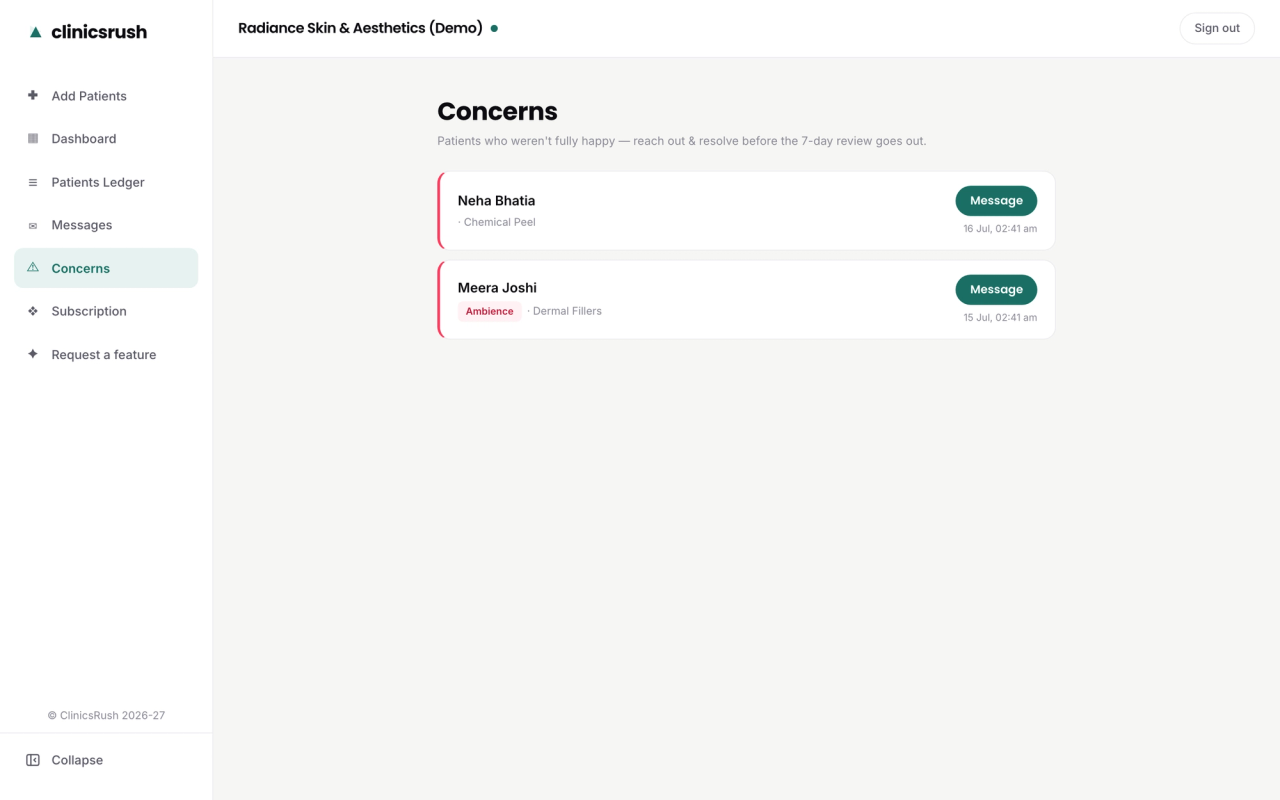
That gap is what ClinicsRush closes.
Your team adds the patient after the visit. It takes about ten seconds. Everything after that runs on its own. The patient gets a warm WhatsApp message at the right moment, asking one question:
"Were you happy with your experience?"
Happy patients tap yes and land straight on your Google review page, while the visit is still fresh.
Unhappy patients don't get sent to Google at all. They get a message saying:
"We're sorry to hear about your experience. Our doctor will get in touch with you shortly to understand your concern."
And the doctor or clinic team gets an email right away.
That's a second chance you wouldn't otherwise have had. You're calling before the review exists, not after. Understand the issue, answer the questions, offer another consultation if it's needed.
Sometimes that one call is all it takes, and the complaint never reaches Google.
You can also read – How to automate patient reviews for your clinic?
Build a Process, Not Just a Response
You can't avoid negative reviews. You can manage them.
The clinics with the strongest reputations aren't the ones that never get complaints. They're the ones that reply quickly, listen properly, fix what can be fixed, and keep asking their happy patients for feedback.
That's what Google notices. It's also what the next patient reading your profile notices.