← All posts

How to Get More Patient Reviews for Your Clinic

When clinic owners think about patient reviews, they usually focus on doctors, treatments, or follow-up systems.

But many reviews are influenced long before a patient enters the treatment room.

They start at reception. Think about it for a moment.

The receptionist is often the first person a patient interacts with. If someone walks into a clinic feeling anxious, uncomfortable, or unsure, a warm welcome can immediately change the tone of the visit.

A smile. A friendly greeting. A staff member who is patient while answering questions.

These things may seem basic, but patients notice them.

In fact, if you read enough online reviews for healthcare providers, you'll find that many reviews spend just as much time talking about the staff experience as the treatment itself.

Patients remember how easy it was to schedule an appointment. They remember whether someone helped them when they were confused. They remember whether they felt welcomed or ignored.

That's why clinics that consistently receive positive feedback usually view every interaction as part of the patient experience, not just the treatment itself.

Sometimes the Best Review Strategy Is Simply Following Up

One mistake many clinics make is assuming the patient journey ends when the appointment ends.

In reality, that's often when the relationship starts becoming stronger.

Think about it from the patient's perspective. They visit your clinic, receive treatment, and go home. A few days later, they might have questions, concerns, or simply want reassurance that everything is progressing as expected. When a clinic takes the initiative to check in, it leaves a lasting impression.

A simple follow-up message can make patients feel remembered.

It tells them that they aren't just another name in a register or another appointment on the schedule. It shows that the clinic genuinely cares about their experience even after they've left.

The problem is that most clinics don't struggle because they don't want to follow up. They struggle because they're busy.

When reception teams are handling appointments, phone calls, walk-ins, billing, and patient records all day, it's easy for follow-ups to get pushed aside. Not intentionally, but simply because there isn't enough time.

That's where having a system in place can help.

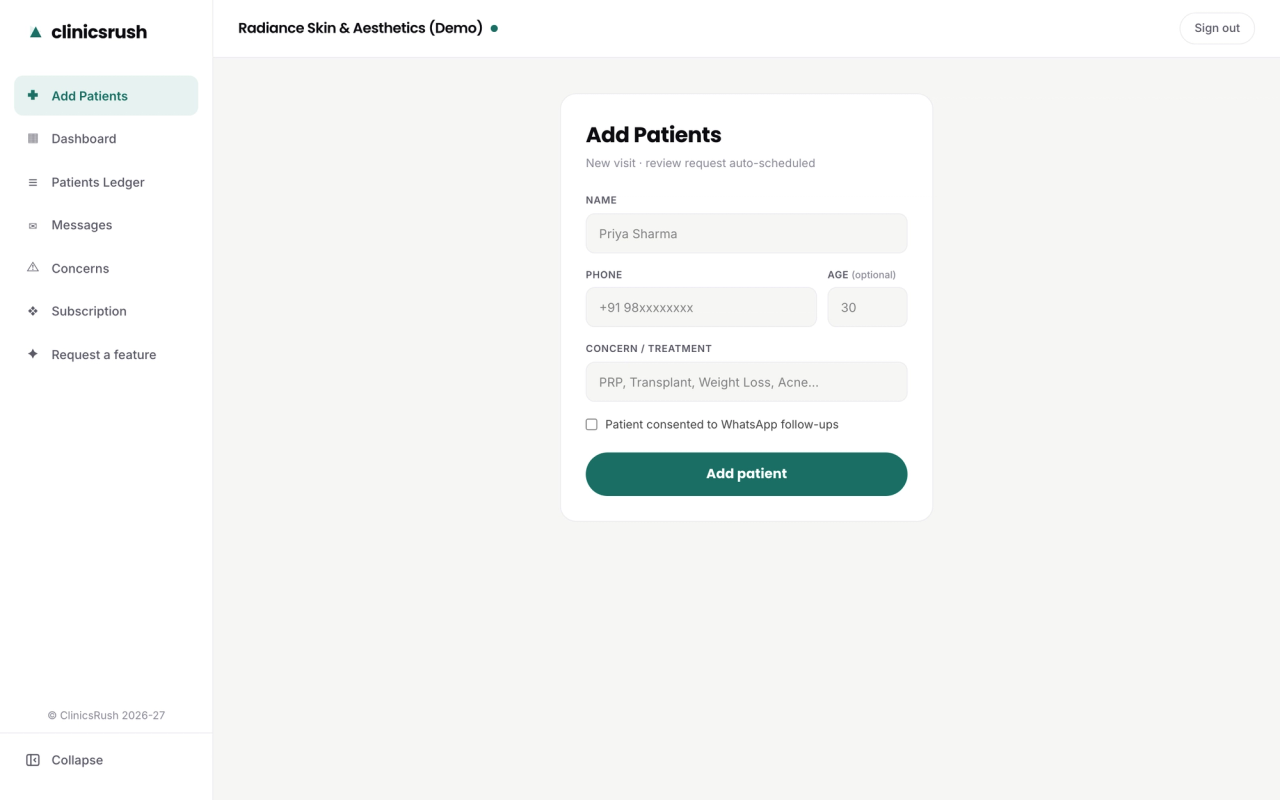
For example, clinics using ClinicsRush can store patient information, treatment details, and visit records in a single dashboard rather than relying on traditional registers or scattered notes. Once a patient's details are added, the system can automatically help with follow-up communication through WhatsApp.

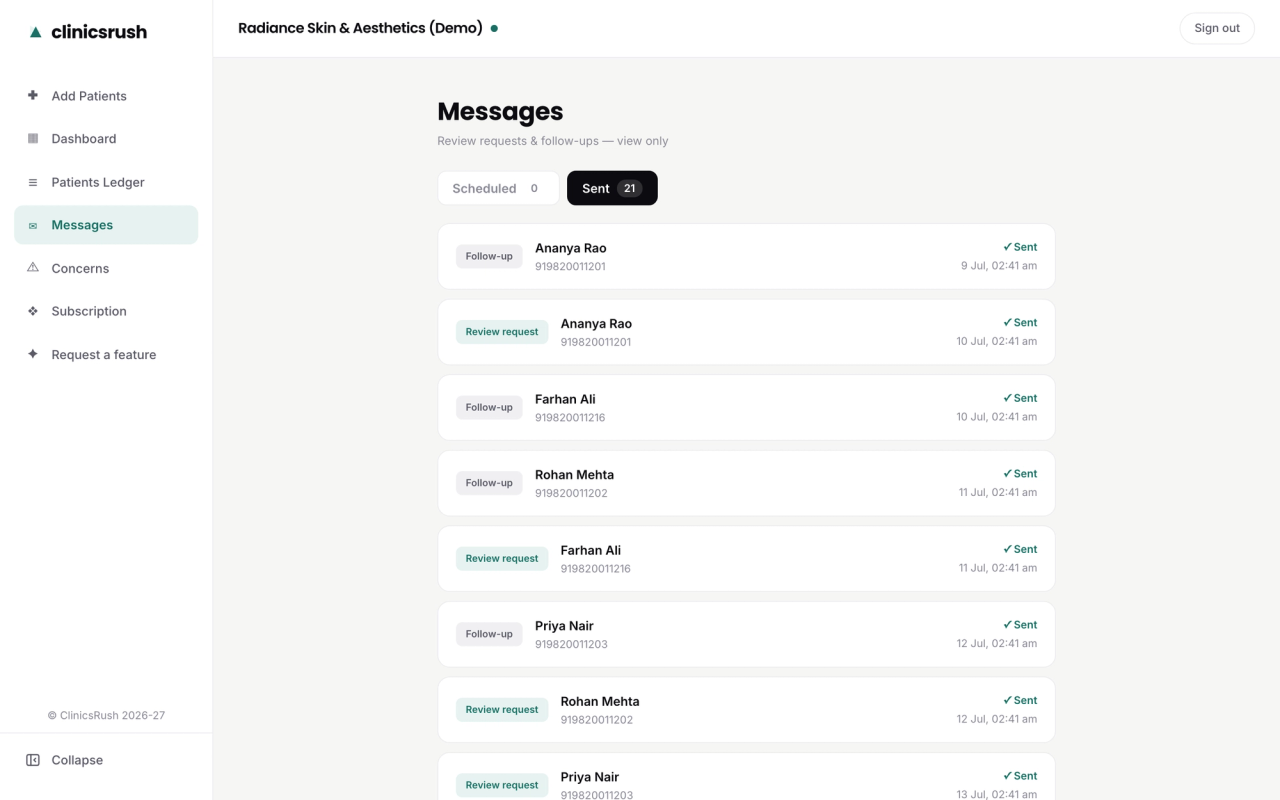
So instead of someone from the clinic remembering to reach out manually, patients receive timely messages based on their treatment journey. Sometimes it's a simple check-in. Sometimes it's a reminder. Sometimes it's an opportunity to share feedback if they've had a positive experience.

What makes this effective is that it doesn't feel like a random review request appearing out of nowhere.

The patient has already heard from the clinic multiple times. They've experienced consistent communication. They've seen that the clinic is paying attention.

By the time they're asked for feedback, it feels like a natural part of the relationship rather than a favor being requested.

And that's often the difference.

Patients rarely leave reviews because they received one message asking for it. They leave reviews because the entire experience; from their first appointment to the follow-up communication afterward, made them feel valued.

Make It Easy to Leave Feedback Without Making It Awkward

Let's be honest. Most happy patients aren't against leaving reviews. They're just busy.

A patient may genuinely appreciate your clinic and fully intend to leave feedback. Then life happens.

Work gets busy.

Family responsibilities take over.

The review gets forgotten.

That's why small reminders can be surprisingly effective. A simple QR code at the reception desk. A card near checkout. A text message with a direct review link.

These aren't aggressive sales tactics. They're simply removing friction.

Some clinics even place small signs explaining how reviews help future patients make informed decisions when choosing a healthcare provider.

This approach often works because it shifts the focus away from helping the clinic and toward helping other people.

Many patients are more willing to share their experience when they know it may help someone else feel more confident about seeking care.

Don't Treat Reviews Like a Transaction

This is where many clinics get it wrong. They become so focused on getting reviews that every interaction starts feeling like a request. Patients can sense that.

Nobody likes feeling pressured. Nobody wants to feel as though their positive experience comes with an obligation to write a review. The most successful clinics understand this.

They ask politely.

They make it easy.

Then they let the patient decide.

If someone doesn't want to leave a review, that's okay. The relationship should always be more important than the review.

In fact, pushing too hard can damage trust and create the exact opposite outcome.

A patient who feels respected is far more likely to return than a patient who feels pressured.

What If a Happy Patient Still Doesn't Leave a Review?

This happens all the time. A patient can be completely satisfied and still choose not to leave feedback. And honestly, that's their right.

Not everyone enjoys posting online. Some people rarely use Google. Others prefer keeping their healthcare experiences private.

Instead of repeatedly asking, clinics can approach the situation differently. A simple conversation can reveal valuable insights. You might discover that the patient didn't know where to leave a review. You might learn that they forgot.

Or you may find that they simply need more time before sharing their experience.

The goal isn't to convince someone who doesn't want to leave a review. The goal is to understand your patients better.

Often, those conversations become just as valuable as the review itself.

The Patients Most Likely to Leave Reviews Are Often Your Regulars

Trust isn't built in a single visit. It's built over time. Think about the patients who have visited your clinic multiple times over several months.

They know your staff.

They're familiar with your processes.

They've experienced your service repeatedly.

These patients are often your strongest advocates.

They've had enough interactions to form a genuine opinion about your clinic, and they're usually much more comfortable sharing that opinion publicly.

That's why some of the best review opportunities come from long-term relationships.

When a patient has returned again and again because they've had positive experiences, a polite review request feels natural rather than forced.

At that point, you're not asking a stranger for a favor. You're asking someone who already trusts your clinic and values the care they've received.

And that's often when the most authentic reviews are written.

The Clinics With the Best Reviews Usually Have One Thing in Common

It's not a bigger marketing budget. It's not fancy software. And it's not because they ask more often than everyone else.

They simply make patients feel valued. They create positive experiences consistently. They communicate well. They follow up. They listen. They remember that healthcare is ultimately about people.

The reviews are simply a reflection of that experience.

When patients feel genuinely cared for, feedback becomes a natural extension of the relationship rather than something the clinic has to chase.

Don't Underestimate the Power of Small Personal Touches

Ask patients what they remember most about a great healthcare experience, and many won't start by talking about the treatment itself.

They'll talk about people. The nurse who remembered their name. The receptionist who greeted them with a smile every visit. The provider who took an extra few minutes to answer questions instead of rushing out the door. The staff member who followed up after a procedure to check how they were feeling.

These moments may seem minor from the clinic's perspective, but they're often what patients remember long after their appointment ends.

Healthcare can be stressful. Patients may be nervous, worried about results, uncomfortable during treatment, or simply having a difficult day. When clinic staff acknowledge those emotions and make patients feel at ease, it creates an experience that goes beyond medical care. And that's exactly the kind of experience people talk about.

Reviews Are Often a Byproduct of Trust

Many clinics spend a lot of time thinking about how to ask for reviews.

A better question might be: Have we built enough trust that patients want to talk about us?

Trust doesn't happen because of one successful appointment. It develops through consistency.

Patients begin to trust a clinic when appointments run smoothly, communication is clear, concerns are addressed quickly, and staff members genuinely seem interested in helping.

Over time, that trust turns into loyalty. And loyal patients often become your biggest supporters. They're the people who recommend your clinic to friends, family members, coworkers, and neighbors. They're also the people most likely to leave thoughtful reviews because they have a genuine relationship with your practice.

The review itself is simply the final step in a much longer journey.

Give Patients a Reason to Keep Coming Back

The strongest patient relationships are rarely built during a single visit.

They're built across multiple interactions. This is why many successful clinics focus heavily on retention rather than constantly chasing new patients.

When patients return regularly, they become familiar with your team. Conversations become easier. Trust grows naturally. The experience starts feeling more personal.

Some clinics create this loyalty by offering exceptional service every time. Others introduce educational resources, wellness programs, loyalty benefits, seasonal promotions, or additional value that makes patients feel appreciated.

The specific strategy matters less than the intention behind it. Patients want to feel that they're receiving value, attention, and care; not just a service.

When that happens, they naturally become more engaged with the clinic and more willing to support its growth.

Create a Culture Where Feedback Feels Natural

One reason many clinics struggle with reviews is because feedback only comes up when someone decides to ask for it.

Patients can sense when a review request feels sudden or forced. Instead, feedback should become a normal part of the patient experience.

Staff can regularly ask simple questions such as:

"How was everything today?"

"Is there anything we could have done better?"

"Were you comfortable throughout your appointment?"

These questions do more than gather information. They show patients that their opinions matter. And when patients feel heard throughout their journey, leaving feedback later doesn't feel unusual, it feels like a natural continuation of the conversation.

Technology Helps, But It Isn't the Whole Solution

Automated review requests, scheduling systems, and feedback tools can absolutely make the process easier. A text message with a direct review link is often far more effective than expecting patients to search for your clinic on their own.

Automated reminders can also help ensure that opportunities don't slip through the cracks. However, technology should support the patient experience, not replace it.

No software can make up for poor communication. No automated message can replace genuine human interaction. And no review platform can create loyalty where trust doesn't exist.

The clinics that generate the most meaningful feedback typically combine efficient systems with authentic patient relationships. They use technology to simplify the process while still keeping the human element front and center.

The Goal Isn't More Reviews. It's More Happy Patients.

This may sound surprising in an article about reviews, but it's worth repeating. The goal isn't to collect as many reviews as possible. The goal is to create experiences that patients genuinely want to talk about.

When clinics focus solely on review numbers, they often overlook the factors that influence those numbers in the first place.

But when they focus on patient comfort, communication, trust, consistency, and service, something interesting happens.

Reviews start appearing naturally.

Patients begin recommending the clinic without being asked.

Referrals increase.

Relationships become stronger.

And the online reputation improves as a result.

In other words, reviews become the outcome of great patient experiences rather than the objective itself.

Final Thoughts

The clinics that get the most reviews are not always the ones with the biggest marketing budgets or the fanciest tools. More often, they're the ones that make patients feel comfortable, heard, and genuinely cared for.

A friendly receptionist, a doctor who takes time to listen, a thoughtful follow-up message, or even a simple conversation during treatment can leave a much bigger impression than most clinics realize.

Of course, making it easy for patients to leave feedback matters too. QR codes, direct review links, and timely follow-ups can all help remove barriers. Tools like ClinicsRush can make this process much easier by helping clinics stay organized and maintain consistent communication with patients without adding extra work to the team's day.

But no tool can replace a great patient experience.

When people trust your clinic, feel valued during every visit, and know that their feedback matters, reviews stop feeling like something you have to ask for constantly. They become a natural result of the relationships you've built along the way.

Want a steady flow of Google reviews?

ClinicsRush asks every happy patient at the perfect moment — automatically.

Start free trial

Keep reading

Why Is Your Clinic Not Ranking on Google?

12 min read →

How Many Reviews Does Your Clinic Need to Rank Higher on Google?

9 min read →